
WELCOME BONUS 300%
UP TO €2000 + 100
FREE SPINS
UP TO €2000 + 100
FREE SPINS
Home → Blackjack
Blackjack at Spinanga Casino: Variants, Rules and Payouts
Side Bet Every Round: Budget Lasts 30 Rounds
The Quantum Blackjack Plus Live table by Playtech offers stakes ranging from 1 to 5,000 EUR with an RTP of 99.57% under optimal strategy. This specific game integrates quantum multipliers up to 1,000x on three-card combinations totaling 21 points. Players must manage their bankroll carefully because the high volatility of these multipliers can deplete funds rapidly during losing streaks. The potential for massive payouts exists but requires a substantial budget to withstand the variance inherent in such high-multiplier environments.
Evolution's Lightning Blackjack provides a different side bet structure with stakes between 1 and 2,500 EUR and an RTP of 99.56%. It features lightning multipliers up to 25x on winning hands, which applies to every round regardless of the base game outcome. The maximum stake limit is lower than the Playtech variant, restricting high rollers who prefer larger exposure per hand. This constraint forces players to adjust their betting strategies to fit within the narrower financial window provided by the platform.
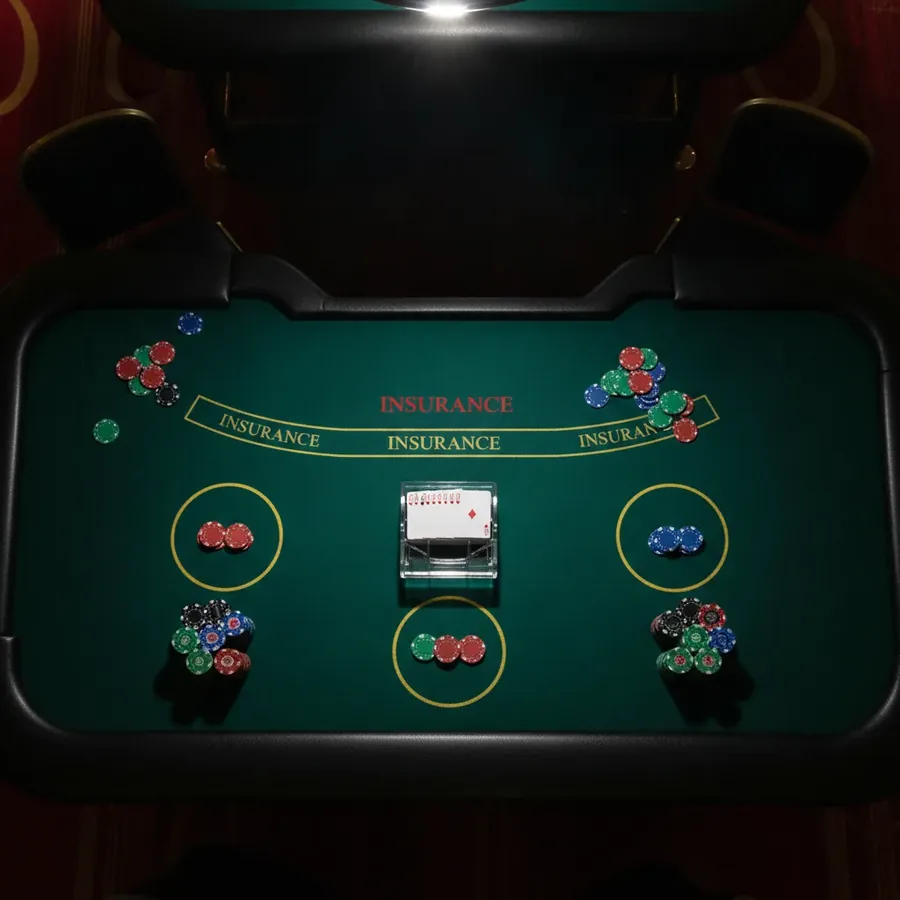
Double Down vs Simple Hit on 11
Blackjack Liberal Vegas Strip rules allow doubling down on any two cards, significantly impacting the house edge of 0.28% and achieving an RTP of 99.72%. This liberal rule set includes standing on soft 17, double after split, resplitting aces, and late surrender, creating the most favorable conditions for skilled players. Doubling down on an 11 against a dealer ten maximizes expected value compared to hitting, as it captures the highest probability of drawing a ten-value card. The standard deviation of 1.15 indicates moderate volatility, balancing risk and reward effectively for those adhering strictly to basic strategy.
What Hole Card Means at a Live Table
In traditional online blackjack, the hole card is dealt face down and checked immediately if the dealer shows an ace or ten. Live dealer games like Evolution's Blackjack Party use continuous shuffling machines or real tables where the hole card is not revealed until the player acts. This procedural difference eliminates the early peek, forcing players to make decisions without knowing if the dealer has a natural blackjack. Consequently, insurance bets become statistically inferior, as the house edge jumps to 7.47% with an RTP of only 92.53% over six to eight decks.
Bonus conditions often exclude Blackjack completely
The welcome bonus offers 300% up to €2,000 plus 100 free spins, but table games contribute only 10% toward wagering requirements. Slots contribute 100%, meaning that playing blackjack significantly slows down the clearance of the bonus funds compared to spinning reels. For instance, wagering €1,000 on blackjack counts as only €100 toward the requirement, whereas the same amount on slots counts fully. This exclusion rate makes blackjack an inefficient choice for players aiming to convert the bonus into withdrawable cash quickly.
Mobile version needs 1 Mbit bandwidth
Streaming live dealer tables such as Quantum Blackjack Plus Live requires a stable internet connection to maintain video quality and game responsiveness. A minimum bandwidth of 1 Mbit is necessary to prevent lag or disconnections during critical moments like placing side bets or splitting hands. Insufficient bandwidth can lead to missed actions or delayed dealer responses, potentially affecting the outcome of the hand in time-sensitive scenarios. Users on slower connections should consider lowering video resolution settings to ensure a smoother gaming experience without interruption.
Blackjack variants at a glance
| Variant | Payout | House edge | Rule | Bet range |
|---|---|---|---|---|
| Blackjack Split / Double / H17 – Regel-Effekte | n.a. (Regel-Modifikatoren) | H17 +0.22 Prozentpunkte; RSA −0.08 Prozentpunkte; DAS −0.14 Prozentpunkte | Dealer Hits Soft 17 verschlechtert RTP um 0.22 Prozentpunkte; Resplit Aces verbessert um 0.08 Prozentpunkte; Double After Split verbessert um ca. 0.14 Prozentpunkte; 6 Decks statt 8 – ca. 0.02 Prozentpunkte. | Double – Einsatz ×2 mit einer Karte; Split – bis 4 Hände; Ass-Split meist mit einer Karte. |
| Blackjack Auszahlung 6:5 statt 3:2 (6 Decks) | 98.15% | 1.85% | Ersatz von 3:2 durch 6:5 fügt exakt +1.39 Prozentpunkte zum Vorteil des Casinos hinzu – stärker als jede andere Regeländerung. Bei $10 Einsatz zahlt Blackjack $12 statt $15. | Blackjack 6:5, Gewinn 1:1 |
| Blackjack Surrender (Late Surrender) – Regel-Effekt | n.a. (Regel-Modifikator) | −0.08 Prozentpunkte | Spieler gibt Hand nach Dealer-Blackjack-Prüfung auf, verliert die Hälfte des Einsatzes. Verbessert RTP um ca. 0.08 Prozentpunkte. Early Surrender ist wesentlich wertvoller (bis −0.6 Prozentpunkte), aber extrem selten. | Rückzahlung 50% des Einsatzes |
| Blackjack Liberal Vegas Strip (liberale Regeln, 3:2) | 99.72% | 0.28% | Günstigste Regelkombination: S17 + DAS + Resplit + Late Surrender. Standardabweichung 1,15 | Blackjack 3:2, Gewinn 1:1 |
| Blackjack Insurance / Versicherung (6–8 Decks) | 92.53% | 7.47% | Separate Nebenwette bis 50% der Hauptwette, wenn der Dealer ein Ass hat. Basisstrategie schreibt IMMER Ablehnung vor (außer Karten zählen bei True Count ≥ +3). Bei einem Deck Vorteil ≈ 5.88% | Insurance 2:1 |
| Blackjack 6 Decks, S17, DAS, DOA, Auszahlung 3:2, Basisstrategie | 99.54% | 0.46% | Dealer steht auf Soft 17; Verdopplung auf jeder Zweierkarte; Verdopplung nach Split erlaubt; keine Aufgabe. Basisstrategie ist für diesen Wert zwingend | Blackjack 3:2, normaler Gewinn 1:1, Insurance 2:1 |
Blackjack doesn't count for every bonus offer
The 300% welcome bonus up to €2,000 plus 100 free spins requires significant turnover before any withdrawal is permitted by the platform. Table games contribute only 10% toward this wagering requirement, which drastically slows the clearance process compared to slots that pay 100%. A player depositing €500 receives a €1,500 bonus, creating a total balance of €2,000 subject to these restrictive contribution rules.
This low contribution rate means standard blackjack hands generate minimal progress toward clearing the bonus funds allocated during the initial registration phase. Since the house edge varies between 0.15% and 1.85% depending on the specific variant chosen, the expected loss per cleared euro is higher than on high-return slots. Players must therefore manage their bankroll carefully to avoid depleting funds before meeting the full turnover obligation defined in the terms.
Quantum Blackjack Plus Live from Playtech offers multipliers up to 1,000x, but playing this table game does not significantly accelerate bonus release due to the 10% cap. Lightning Blackjack by Evolution allows unlimited players and pays 99.56% RTP, yet the slow contribution rate remains the primary bottleneck for account verification. The structural disadvantage lies in the math: earning €100 in wagering volume requires €1,000 in actual bets placed at these tables.
Insurance Pays 2:1 Yet Still Costs Money
Insurance is a side bet paying 2:1 when the dealer shows an Ace, but it carries a steep house edge of 7.47% across six to eight decks. This negative expectation makes the wager statistically unsound for most players following basic strategy, as the base return drops significantly upon placement. The payout appears generous at double odds, yet the long-term mathematical reality ensures a consistent drain on the player's total bankroll over time.
In contrast, the main Blackjack 3:2 game offers a much lower house edge of 0.46% when played with optimal strategy on soft 17 rules. Adding insurance raises the overall cost of play because the side bet loses more frequently than it wins, effectively increasing the casino's advantage. Basic strategy explicitly advises rejecting this option unless the player is counting cards and holds a true count of plus three or higher.
Single-deck variants present a slightly better scenario for insurance, reducing the house edge to approximately 5.88% while maintaining the 2:1 payout structure. However, even this improved statistic remains unfavorable compared to the core game returns available without side wagers. Quantum Blackjack Plus Live excludes such traditional side bets, focusing instead on quantum multipliers that apply directly to winning hands rather than defensive insurance plays.
The distinction between early and late surrender mechanics further highlights the complexity of side bets versus main game rules in live dealer environments. While insurance costs money regardless of deck count, surrender options can actually improve RTP by 0.08% if utilized correctly under late surrender conditions. Understanding these mathematical nuances prevents players from making costly errors based on superficial payout ratios presented on the screen.
Even Money only possible with Dealer Ace
Even Money is essentially a guaranteed payout offered when a player holds a natural blackjack and the dealer displays an Ace as their upcard. This option locks in a 1:1 win immediately, protecting the stake from potential pushes if the dealer also completes a blackjack hand. It functions as a simplified form of insurance, eliminating the risk of losing the entire hand value in a tie scenario.
The decision to take Even Money alters the expected value negatively over the long run because it forfeits the higher probability of winning the full 3:2 payout. Standard Blackjack 3:2 rules provide a house edge of just 0.46%, whereas accepting Even Money guarantees a smaller, fixed return that ignores the dealer's hole card outcome. Statistical analysis shows that declining the offer yields better results unless the player has precise knowledge of the remaining deck composition.
Lightning Blackjack by Evolution modifies this dynamic by introducing lightning multipliers up to 25x on winning hands, which can overshadow standard Even Money considerations. Players receiving a natural blackjack face a different risk profile when multipliers are active, making the static Even Money choice less attractive compared to potential boosted payouts. The presence of these random number generators adds volatility that changes the traditional calculus of safe versus aggressive betting strategies.
Quantum Blackjack Plus Live utilizes quantum multipliers up to 1,000x on three-card combinations totaling 21 points, rendering traditional Even Money concepts obsolete in its specific format. The game focuses on explosive wins rather than conservative guarantees, appealing to players seeking high-variance outcomes over steady, small returns. This shift in design philosophy reflects modern live dealer trends prioritizing entertainment value through dramatic multiplier events instead of classic risk mitigation tools.
Unlimited seats via a split dealer hand
Lightning Blackjack by Evolution features a split dealer hand mechanism that allows unlimited players to participate simultaneously in a single betting round. This architectural choice removes seat limits common in traditional physical casinos, enabling massive concurrency without compromising the speed or integrity of the deal. Each player competes independently against the dealer's unified hand structure, streamlining the flow of the game for large audiences.
The technical implementation supports bets ranging from 1 EUR to 2,500 EUR per hand, accommodating both casual participants and high rollers within the same session. With an RTP of 99.56%, the game maintains competitive returns despite the complex multiplayer architecture and associated lightning multiplier features. The split dealer logic ensures fair distribution of cards while optimizing server load and reducing latency for all connected users globally.
Playtech's Quantum Blackjack Plus Live contrasts this approach by limiting participation to standard table sizes while offering higher potential multipliers up to 1,000x. Its betting range spans 1 to 5,000 EUR, providing greater flexibility for high-stakes players who prefer individualized attention over mass-market concurrency. The divergence in design highlights two distinct strategies for engaging live dealer audiences: one focused on scale and the other on maximum win potential.
Evolution's Party theme in Blackjack Party introduces two moderators to enhance social interaction, complementing the unlimited seating with a vibrant atmosphere. This combination of technical scalability and human engagement creates a unique hybrid experience that bridges the gap between digital efficiency and land-based sociability. Players benefit from reduced wait times and increased opportunities for strategic observation across multiple concurrent hands dealt in real-time.
How long do 100 EUR last at a 1 EUR table?
At a 1 EUR minimum bet table like Quantum Blackjack Plus Live, a 100 EUR bankroll allows for exactly 100 initial hands if no wins occur. Given the house edge of 1.85% for the 6:5 payout variant, the expected loss per hour is approximately 18.50 EUR assuming 60 decisions per minute. This projection indicates the funds would likely be depleted within roughly five to six minutes of continuous play under worst-case scenarios.
Switching to the standard 3:2 variant reduces the house edge to 0.46%, extending the theoretical lifespan of the 100 EUR deposit to nearly twenty-one hours at the same pace. However, variance plays a critical role; a single losing streak of ten hands consumes ten percent of the total balance, significantly impacting longevity. Players relying on progressive betting systems often exhaust their funds faster due to the exponential increase in wager size during downswings.
Lightning Blackjack operates with a similar 1 EUR minimum but introduces volatility through lightning multipliers that can instantly double or triple outcomes. These random events create wider swings in bankroll trajectory, meaning the 100 EUR could vanish in minutes or potentially grow substantially with luck. The average duration becomes highly unpredictable, requiring strict stop-loss limits to preserve capital against the inherent randomness of multiplier triggers.
What Percentage Does Blackjack Count Towards Bonus?
Blackjack contributes exactly 10% to the bonus turnover requirement of the 300% welcome bonus up to €2,000 plus 100 free spins. This low contribution rate means that every €10 wagered on these tables only counts as €1 toward clearing the mandatory playthrough conditions attached to the deposit match. Consequently, players must wager ten times the nominal bet amount to satisfy the rollover obligations efficiently compared to slot games.
Slot machines contribute 100% to the same bonus terms, creating a stark contrast with the table game allocation percentages used in this calculation framework. While slots allow full credit for every unit staked, blackjack tables impose a significant discount factor that extends the time required to unlock withdrawable funds. This structural difference dictates that high-rollers should prioritize high-contribution games if speed is their primary objective for bonus activation.
The house edge for standard blackjack variants typically ranges between 0.15% and 1.85%, which interacts dangerously with the reduced contribution percentage during active wagering. A player facing a 0.46% disadvantage while contributing only 10% effectively burns through bankroll much faster than the raw RTP suggests when trying to meet the turnover target. Therefore, strategic deviation or lack of basic strategy knowledge can accelerate fund depletion before the bonus requirements are ever satisfied.
RNG draws cards from virtual eight-deck shoe
Quantum Blackjack Plus Live by Playtech operates with specific betting limits ranging from 1 to 5,000 EUR per hand in its live dealer environment. This high-stakes variant features Quantum Multipliers that can reach up to 1,000x on three-card combinations totaling 21 points, significantly altering standard payout expectations for lucky hits. The maximum potential win cap is thus theoretically unlimited by fixed jackpots but strictly bound by the upper stake limit and multiplier ceiling.
Lightning Blackjack by Evolution offers a different risk profile with bets spanning from 1 to 2,500 EUR and Lightning Multipliers capped at 25x on winning hands. Unlike the quantum version, this title supports an unlimited number of players simultaneously, ensuring rapid game flow even during peak traffic hours without manual intervention delays. The lower multiplier cap reflects the adjusted volatility designed to balance the higher frequency of winning hands in this specific evolution product.
Blackjack Party by Evolution maintains a more conservative stake range of 1.00 to 1,000 EUR while emphasizing entertainment value through dual moderator interactions. This format targets casual players who prefer a social atmosphere over high-variance multiplier mechanics, resulting in a steadier, lower-volatility gaming session. The absence of extreme multipliers ensures that bankroll management remains predictable, aligning with the standard 99.56% RTP associated with the provider's core mechanics.
How many decks are in the shoe?
Standard six-deck shoes featuring Soft 17 standing rules, Double After Split allowance, and no surrender options yield a baseline house edge of 0.46%. This configuration requires strict adherence to basic strategy to maintain the theoretical return to player rate of 99.54% over extended playing sessions. Deviating from optimal plays immediately increases the casino's mathematical advantage, eroding the player's long-term expected value.
Single-deck games with classic rules and 3:2 payouts offer a superior house edge of just 0.15%, representing the most favorable mathematical scenario available. However, this advantage is often neutralized by casinos replacing the 3:2 payout with 6:5 ratios, which instantly adds 1.39 percentage points to the house edge. Such a drastic rule change makes single-deck 6:5 games mathematically inferior to many six-deck 3:2 variants despite the fewer cards involved.
Six-deck games utilizing Liberal Vegas Strip rules, including late surrender and double after split, achieve an exceptional house edge of only 0.28%. This combination represents the lowest possible disadvantage for players willing to commit to complex rule sets that require precise strategic execution. The standard deviation of 1.15 indicates moderate volatility, balancing frequent small wins against occasional larger losses during variance swings.
Bet two percent of bankroll per hand
Insurance bets carry a severe house edge of 7.47%, making them one of the worst wagers available in any blackjack variant regardless of deck count. This side bet pays 2:1 but is mathematically doomed unless the player employs card counting techniques where the true count exceeds +3. For the average player relying on visual cues alone, accepting insurance consistently guarantees a negative expected value over thousands of hands.
Basic strategy mandates always declining insurance when the dealer shows an ace, preserving the integrity of the main game's 0.46% house edge baseline. Accepting insurance effectively transfers risk to a separate proposition with a 7.47% disadvantage, which cannot be offset by subsequent main game outcomes. This rigid rule prevents emotional decision-making during streaks where the dealer frequently hits blackjack, protecting the player's long-term mathematical expectation.
The cost of insurance becomes apparent when comparing its 92.53% RTP against the main game's near-99% return rates across various configurations. Even in single-deck scenarios where the insurance edge drops to approximately 5.88%, it remains vastly inferior to the primary wagering options. Players focusing on bankroll preservation must treat insurance as a forbidden action unless they possess verified counting skills and positive deck penetration.
Surrender vs Playing Out on 16 vs 10
Late Surrender allows players to forfeit half their bet after the dealer checks for blackjack, improving the overall RTP by approximately 0.08 percentage points. This rule modification is particularly valuable on stiff hands like 16 against a dealer's 10, where the probability of busting or losing outweighs the slim chance of winning. By cutting losses early, players preserve capital for future hands where the mathematical expectation might be more favorable.
Early Surrender is significantly more valuable, reducing the house edge by up to 0.6 percentage points, but it is extremely rare in modern online environments. Most platforms restrict surrender to late execution only, forcing players to endure the full statistical disadvantage of playing out marginal hands against strong dealer upcards. The scarcity of early surrender options necessitates stricter bankroll management to compensate for the increased variance inherent in forced play decisions.
Resplitting Aces improves the RTP by 0.08 percentage points, while allowing doubling after split enhances it further by roughly 0.14 percentage points. These liberal rules collectively shift the house edge downward, making specific rule combinations critical for optimizing long-term profitability. Players seeking the best odds must actively verify these modifiers before seating, as their absence directly correlates to higher operational costs per hour of play.
Contact
Live - online chat
Banking


Providers








Spinanga Casino 2026